Friends of Tribal Society
Events


Friends of Tribals Society (FTS) an introduction


OVERVIEW

Friends Of Tribal Society (FTS) is a society registered under the West Bengal Societies Registration Act, 1961.  This organization was formed by a group of social service activists in 1989 with a vision to improve the welfare and status of vanvasi people essentially through a two-pronged approach of spreading literacy and providing health services to them. The functionaries believe that unless the socio-economic condition of the poor and downtrodden tribals is improved, the country will never prosper or progress.


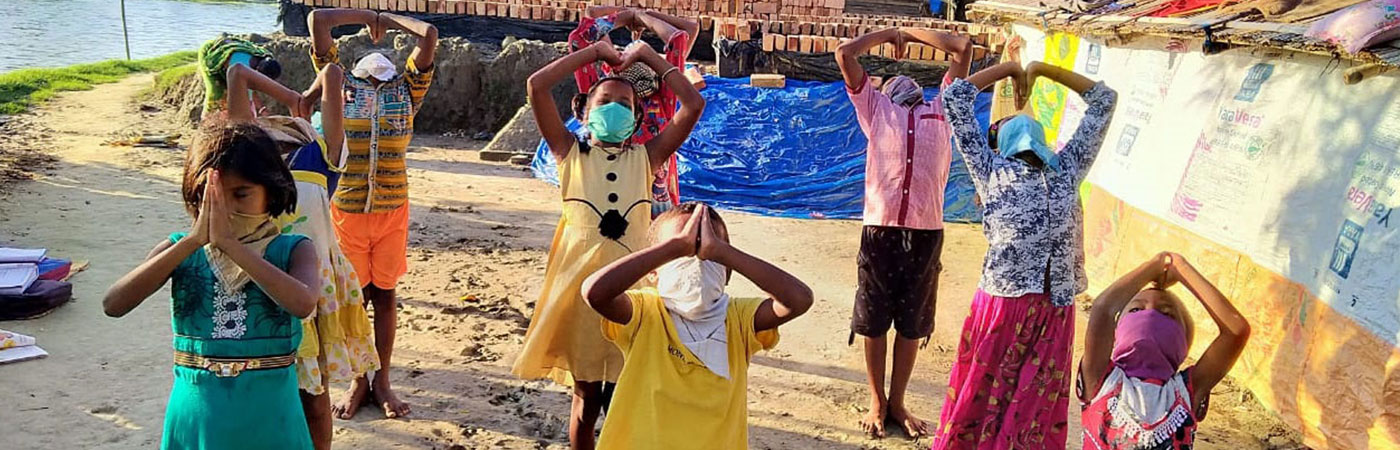
From the very inception, FTS has laid special emphasis on promotion of the all round development of tribal communities, which includes, empowerment of villages through awareness generation, development of a more healthy community that cares for themselves as well as others and creating a sense of patriotism amongst people and providing education. One of the major thrust areas is to impart useful information and non-formal education to the tribal and rural children in the age group of 6-12 years, in the remote villages.  The main focus is on literacy of tribals.


Since 1989, FTS has pursued its avowed mission of 'Prosperity through Literacy'. The organization believes that it is only basic education that can empower tribal children and help them regain their identity. Hence, education of the first generation learners, drop-outs and young boys and girls is a special focus area of the activities implemented by the agency.  The members and expert group of friends of tribal society visualised that tribals need to be supported to support themselves. To accomplish this, focus of the functionaries in various areas of development are woven around the feeling of trust, love and service to the community. Functional areas of work include upliftment of the tribal community in terms of not only overall development but freeing them from social and political exploitation and superstitious beliefs.  The achieve this, the agency conceptualised that work needed to be undertaken in the major dimensions of:

·  Primary Education

·  Change in the society

·  Village Organisation

·  Promoting Social harmony

which would lead to giving a constructive shape to their overall mission.


To accomplish the above, the Friends of Tribal Society started a project Ekal Vidyalaya Yojna which was launched in April’ 2000 in the rural and tribal areas of Gumla district in the state of Jharkhand. the project is presently functioning in 376 villages, through 300 schools and 656 centres. A total number of 9987 tribal children are covered, among these 7,500 working children are – 500 migratory, 250 disabled and 1,737 others.

TOP


OBJECTIVES

The major objectives of the project are to:

  • Eradicate illiteracy from backward tribal areas by providing free non-formal education through a people's movement.

  • Empower people.

  • Achieve social transformation through education and empowerment.

  • Promote social harmony.

TOP


MAJOR FEATURES

The significant features of the project are to:

v     Reduce social problems, exploitation, and increase the standard of living of the villagers.

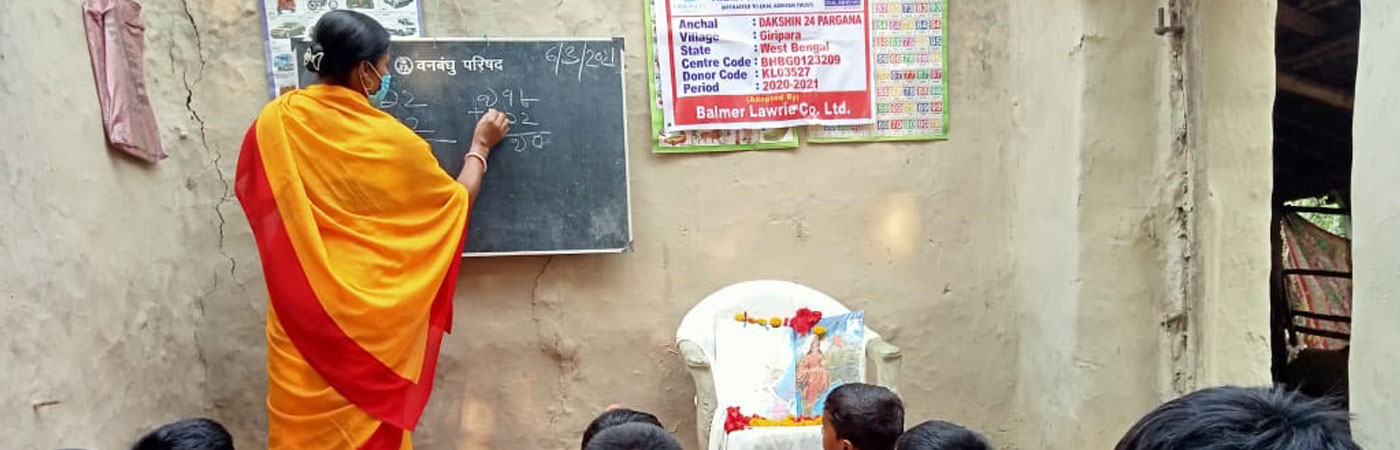
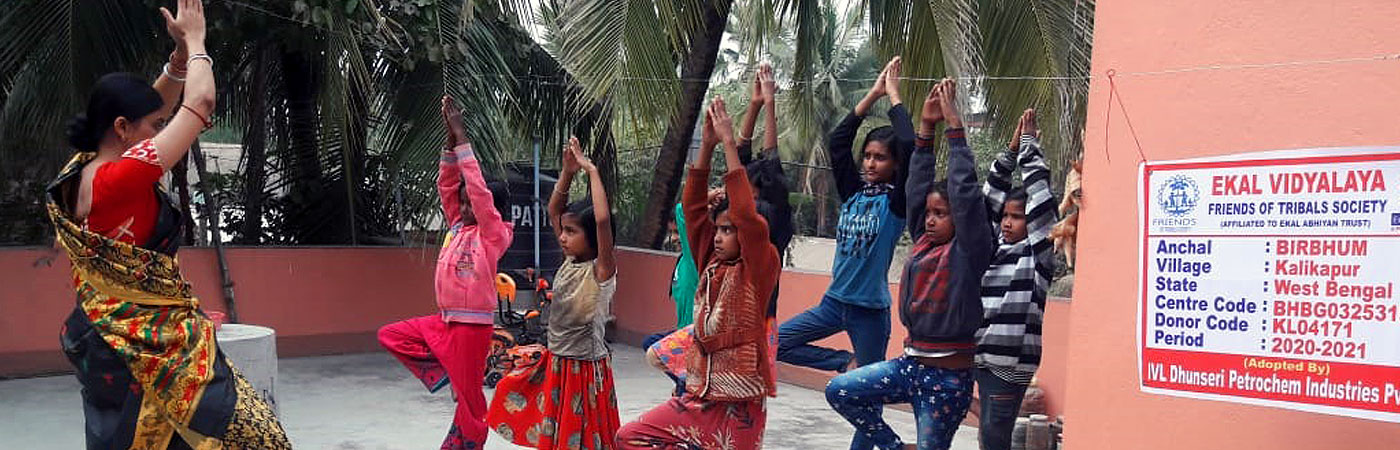
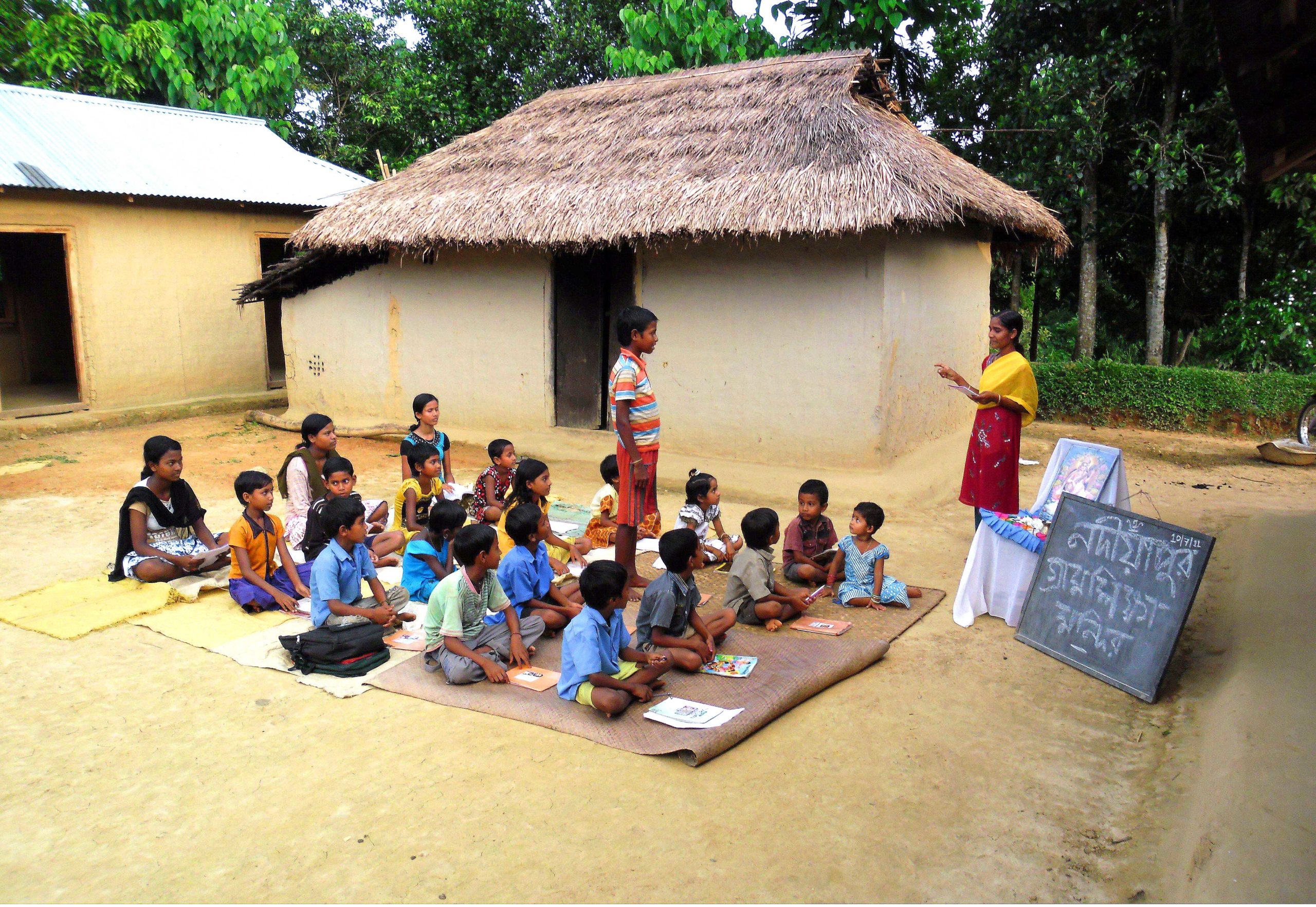
v     Spread literacy through the Alternative Education System, ‘Gram Shiksha Mandir’ among the children of deprived tribal society.

v     Provide proper health care through advocating cleanliness, good manners, sanitation and promote character building amongst the younger generation of the local tribal communities.

v     Preserve local customs, traditions and culture of the primitive tribes.

v     Inculcate a sense of awareness about commitment to the nation.

v     Train teachers and build their capacities. Organise weekly, fortnightly and monthly meetings.


One Teacher Schools (OTSs) called ‘Gram Shiksha Mandirs’ have been set up by the Friends of tribal Society in all the villages of Bishampur Block of Gumla District. The functionaries of the organisation perceive that these schools provide an entry point for reaching out to the entire community. It needs to be mentioned that besides the focus on health and education other aspects related to the overall development of the village and local people is also undertaken.


EXPECTED OUTCOMES 

  • A well organised and well informed community.

  • Developing a more healthy community caring for themselves as well as others.

  • Developing harmonious social fabric.

  • Building feeling of patriotism.

  • Well-educated children, to be educated at least to the primary level.

TOP

ROLE OF THE COMMUNITY


A.  Community Groups/Individuals Involved


The individuals involved are the local people/villagers, local body members like teachers and Acharyas and individuals of social organisations like Adim Jati Vikas Samiti.


B.  Process of Community Involvement  

Well-planned strategies for promoting the process of community mobilisation and involvement have been implemented by the organisation to undertake different activities at various operational levels. An attempt is continuously made to involve the community at every stage of project planning and implementation. The organisation aims at confidence building amongst the local community which they perceive is the real strength and propelling force behind this educational endeavour with support from the Acharyas, local teachers and project staff.  from identification of location/space for the school to its proper functioning, and selection of Acharya, people of the concerned village where the project is to be launched are contacted and involved. Various steps taken for involving community partnership and participation are as follows:


·        Constitution of planning team

At the village level, constitution of a planning team and its capacity building is an important step towards achieving the goals set by the organisation. Members of the local body who represent the village community have been and are involved in a holistic manner in the planning of various project activities.


·         Awareness Generation


Initially the villagers were reluctant and indifferent to the activities of the project and were not so keen to educate their children. In view of this, project functionaries decided to organise awareness programmes/campaigns and hold meetings to convince the local people about the usefulness of different developmental activities and need to educate their children.  Functionaries thus faced an uphill task in persuading the community about the importance of education in their children's lives.  It took some time for the people to realise and understand the usefulness of various educational activities and its relevance in their lives.  Citing examples of neighbouring villages helped in motivating villagers.  Once the villagers were convinced the functionaries initiated a participatory planning process for opening of ‘Gram Shiksha Mandirs’, identification of dropouts and non-enrolled children and selection of Acharyas


·        Location of Space for Gram Shiksha Mandir

Identifying the location/space for the ‘Gram Shiksha Mandir’ is undertaken by involving the village people.   To facilitate their involvement, a Sanghatak, (in charge of 10 schools) conducts meetings and holds discussions with the Village Education Committee members/villagers and parents about organisation of various programmes like Independence Day, Republic Day, Holi and Bal Mela/Anand Mela etc. These are important occasions that bring the community closer to the functionaries and the project.


·        Appointment of Acharya


The selection and appointment of Acharys is the responsibility of the local community. In every village one teacher (Acharya) from the same village is appointed to teach in the Gram Shiksha Mandir. He/she is generally tenth pass. If not available an eighth pass candidate is also appointed. About 40% of the Acharyas are females.


·        Constitution of Committees


To facilitate the smooth functioning of project activities by the community itself, the organisation has evolved a community based implementation, monitoring and supervision mechanism.  This has been realised through the constitution of committees at different levels as is indicated in the flow-chart given below.  The local community plays a major role at every stage.

TOP


Organisational Management Structure of One Teacher Schools

 Levels                                                     Functionaries

I-Village              Acharya & Gram Samiti

II-Cluster             Up-Sanch Pramukh & Up Sanch Samiti (10 Vidyalayas)

                                                (Sangathak)                            

III-Block               Sanch Pramukh & Sankul Samiti (3 Sanchs, 30 Vidyalayas)


IV-Zone                Sankul Paryavekshak & Sankul Samiti (3 Sanchs, 90 Vidyalayas)


V-District            Anchal Yojna Toli & Prashikshan Toli (3 Sankul, 270 Vidyalayas)

              & Anchal Samanvaya Samiti & Anchal Arogya Samsiti


The flow chart indicates that there is a well-built organisational management system for not only implementing but also monitoring and supervising the work undertaken by One Teacher Schools.  For every 10 Schools, there is Sanghatak who visits all the schools twice a month, organises meetings with the Acharyas, discusses about the progress of the children and solves problems, if any.  This person makes several night halts in the respective villages staying in one of the households and is thus treated like a family member. He/She interacts with parents and other members of the community about the education of their children. He also enquires about their regular/daily activities and shares information and ‘Know-How’ about new developments taking place in the area of agriculture. Sometimes if need arises, this functionary also arranges seeds, manure and plants for the villagers, thus he/she also helping in the overall development of the village.


A number of Samities are established to supervise and monitor both scholastic and co-scholastic school activities, such as - Sanch Samiti, Sankul Samiti, Anchal Samiti and Shiksha Samiti.  All the Samiti in-charges are local people. They are given responsibilities to oversee the school activities and send regular reports to the project office. Through this approach, it has been possible for the organisation to not only involve the community at different levels but elicit their active participation in the day-to-day activities of the centers. There is a Sankul Paryavekshak (for 90 Schools) who visits all the schools periodically and provides guidance to the Acharyas on various teaching-learning aspects.


The community vis-a-vis the organisational management structure contributes in different ways at each level of functioning as is detailed out below:


Community Contribution at Various Levels


1. At Village Level


          (i)   Selection of Acharya

         (ii)  Contribution of money for purchase and development of education materials

         (iii) To motivate the children to go to school and enjoy school activities.

         (iv) Selection of site / building for school.

         (v)  Contribution in terms of cash and kind.


2. Panchayat level


       (i) Selection of the village for establishment of one teacher school.

      (ii) To organize other villagers to protect and preserve local customs and  culture.                                           


3.  At Block Level

             (i)   Selection of the Panchayat.

            (ii)  Cash and kind collection at the block level Karyakram.

            (iii) To control and monitor the accounts at the block level.

            (iv) To activate the village committee for monitoring the schools.

            (v)  Contribute in terms of cash and kind at the time of training the Acharyas.


4.  Sub-Divisional Level

           (i)  Check and verify the Pravas expenditure of the Purnakalin Karyakartas.

          (ii) To check and verify the evaluation report.

         (iii) Sub-divisional Shiksha Sammiti helps to develop the Acharya's capacity from

               time to time.


5.  District Level

             (i)   Check and verify monthly statement of accounts.

            (ii)  Monitoring the Anchal toil Karyakarta's Hon'm and Pravas.

            (iii) Contributions to finance and management of the local karyakram

                  are arranged .

          (v) District level committee members visit the schools and undertake                    inspection at different levels.

                 At all the levels monthly meeting expenses are borne by the respective                    commitees.


·        Establishment of Arogya Samiti

 In addition to all the Samities working in the area of education, an Arogya Samiti is also constituted at the village level to take care of the health of children as well as that of the villagers. Young ladies (Arogya Sevikas) from the community are selected, provided with a ‘Medical Kit’ to provide services to the villagers and undertake visits to every household so as to sensitise and guide the local people in health related issues particularly immunisation.


·        Door-to-door visits

Members of the organisation conduct visits to each household and organise meetings wherein every elder member of each household participates.  This is undertaken with a view to establish a close emotional bond with the local community members. During these visits the functionaries attempt to generate awareness about the importance of education in life. 


·  Visits by functionaries

At regular intervals the project in-charge visits all the Gram Shiksha Mandirs.  This functionary organises meetings with each Acharya in every school. On these occasions, the community members, particularly VEC members and other social activists of the area gather in the school.  However, at times only certain sections of the local community attend whereas the more marginalized do not.  Difficulties are faced in eliciting the participation of all.  The project in-charge provides information about health and hygiene related issues and immunization of the children to all the village members. suggestions given by the villagers are given due importance and executed.  In this manner, the community members take an initiative in decision making and also feel involved in the planning and execution of project activities.  Some villagers and functionaries asserted that "this kind of continuous interaction generates a feeling that the school is theirs and hence it is their responsibility to supervise and monitor the school activities". The project functionaries believe that  this will slowly lead to a 'feeling of concern and ownership' motivating the local people to be a part and parcel of all school activities.


Gram Shiksha Mandir not only provides education but a platform for Interaction.


· Van Yatra

In the sequence of activities implemented for community mobilisation and enhancing their participation, Van Yatra is one of the significant initiatives undertaken by the organisation. Under this initiative, eminent personalities of the concerned districts are contacted by the organisation. Selected people visit the villages and meet the villagers, particularly parents, interact and indirectly generate awareness, about the different activities of the organisation and its usefulness. They also try to convince the local people that the programmes are meant for their upliftment and for improving the quality of their children lives.  They try to make them understand that other people in the society are also with them and want to help them. This strategy has helped in developing cooperation and a feeling of brotherhood among the community. It has resulted in increasing the number of so-called 'Friends of tribal society', to a large extent not only in Jharkhand but also in other States where the project is operational.


· Sports Meet

Organisation of sports events is another strategy adopted by the FTS to mobilise the community and elicit their support and cooperation in various developmental activities. A large number of children from the area including adolescent girls participate in the Marathon and bicycle race organised by the functionaries. The project functionaries perceive that the annual sports meet has contributed significantly in building confidence among the villagers and children. In addition, it has proved to be an effective measure in promoting the self-confidence and self-esteem among the adolescent boys and girls. It has also generated new strength, hope and energy amongst the project functionaries. 


C.  Type of Involvement


The community is involved at every stage from identification of location/space for the school to its proper functioning and supervision.  The major groups involved in the different activities of the project are the functionaries, villagers Acharyas and parents:


·  Project Functionaries

The project functionaries' have been quite successful over a period of time in mobilising the community and sensitising them towards the need to educate their children and improving their quality of life. This is apparent as even the women folk of the concerned villages are now interested in educating their children.  The project staff provides guidance and supervision as and when required, organises teaching-learning materials for the school, in addition to providing other facilities.  They also discuss the organisation of various programmes, with the local community and Acharyas in an effort to provide and improve the quality of education being imparted to the children.


·  Villagers/Community Members

Overtime villagers have take the responsibility of managing and running the centers and participating wherever possible in organising various activities/events of the centers.  They also make all necessary arrangements for improving the functioning of the centres with the help of the children.


Most of the villagers being agricultural labourers cannot afford to contribute in terms of money to support different activities; they try to contribute 'in kind' as far as possible.   The role of the community with respect to individual and other social organisations such as Adim Jati Vikas Samiti and local body members (Pramukhs) etc. and their involvement is noticeable. In fact, local body members have come closer to the FTS through the activities of the one teacher schools.   The Pramukh of the village along with other community members attend meetings organised by the FTS and share their experiences. However, at times in spite of their willingness, they are unable to attend the meeting due to their personal and occupational responsibilities. They also try to contribute towards the development of the educational activities of the children through 'shramdan'.  The participatory approach  adopted by the agency has helped in involving the community more actively in the entire project.


·   Acharayas

The Acharaya of the Gram Shiksha Mandir is the central implementer or organiser of the project at the village-school level. By implication, they are fully responsible for mobilising the villagers, particularly parents of the children, identifying the dropouts, enrolling children in the school and monitoring children's attendance.  In addition, they also hold meetings with Block Development Officers and other officials and functionaries. They also attend and participate in monthly block and cluster level meetings that the project functionaries organise. They share information on the activities of the panchayats during meetings held with parents.  They also inform the parents about the progress of their children and join in the rituals and celebrations of local functions and festivals, Bal Melas and National Festivals. They try to ensure maximum participation of children, parents and villagers in these activities and events. The impact of this being that parents have not only accepted the organisation and its activities but are also interested in learning to read and write themselves. Some of them have even learnt to write their names, which is an additional achievement for the functionaries. 


The second important area that the acharyas are involved is in the overall development of the villages, through providing inputs in health-care and education by calling doctors if the need arises.  They also try to promote the development of local art and culture  and generate awareness on health sanitation and general cleanliness. To enhance agricultural produce they share information and important 'know-how' with farmers on various aspects like irrigation,  techniques of plantation, supply of seeds etc.


Central to all their activities is that of teaching. Academic subjects are generally transacted through the adoption of joyful learning methodology. They place a lot of emphasis on preparing children for the future by providing inputs on education for life, besides engaging them in clay modelling, hobby classes and giving them relevant home tasks. Responsibility of running the center is assigned by the acharyas to the community in their absence.     


· Parents

Community members particularly parents, contribute in the education of their children in a number of ways. This includes motivating other parents and villagers to enrol and retain their children, coordinating and organising various activities promoting education in the centers.  A special focus is laid on classroom related activities. Finally, they also try to help and promote overall development of the village.


Mothers also motivate their girl children to attend the centres. Some community members utilise the weekly meetings as a forum to persuade the parents to send their children to school and attend regularly, for this they also offer their services in bringing children from their homes to the centers.

On their part, coordination and organising various activities promoting education in the centre involves contribution during organisation of festivals, national function, decoration of place during cultural programmes.  They also actively participate in Bal Melas, and support various activities in cash or kind.  They form Mahila Samitis for promotion of girl child education.  They keep an update on the activities conducted by visiting the centres frequently and keeping abreast of activities by meeting VECs, interacting with the visitors and workers who come to visit the centres from time to time and making necessary arrangements during their visits.  Besides providing tatpati for the children, they contribute in shramdaan like-levelling of school playgrounds, planting trees, cooking food, supplying drinking water etc.  In the absence of teachers, suitable community members run the centre and teach the children. 


Parents also contribute in the classroom situation by helping the teacher in material development, monitoring and supervising education of children.  In addition, they monitor teachers' well being, attendance, punctuality and regularity.  Monitoring 'what is happening' in the school through scholastic and co-scholastic activities that are conducted, performance of teacher/students, interaction between teacher-students forms a major part of their responsibilities.  Some parents also monitor and asses children's progress and performance in tests and/or annual exams.  A special mention has been made about community members providing chalk, fuel for night lamp and minor contributions for repair and proper maintenance of the school.   Finally, parents also contribute in the overall development of the village by maintaining and constructing small bridges.


Usefulness of Project Activities 

·  Exposure of children to basic education and adults becoming literate.

·  Uniting the villagers

·  De-addiction from liquor is visible in the community.

·  A perceptible change in attitude towards girls education with more girls attending schools-centres

· Children have learnt about the importance of health, sanitation and values like cooperation.


Suggestions of Improvement  


·   The organisation should work in joint collaboration and mutual cooperation with other organisations like Vikas Bharti, etc.

·    The key life concerns, common to health and nutrition of children need to be given a special thrust in the overall activity of the project.  These issues should be implemented in an integrated and holistic manner along with education. 

·    There is a need to instil a family/community based ethos for the child’s well being.

·   Primary health centre should be there in the village besides periodic visits of a good doctor, along with irrigation facility for the area.

·    School buildings should be provided

·    Special arrangements need to be made to promote girl's education

·   Mahila Samiti should train ladies in cutting and tailoring so that they earn their livelihood.

·    Provision of games and sports material in centres

·    Construction of Vidyalaya Bhawan with the support from FTS

·  More interactions with project functionaries, so that they can contribute meaningfully and constructively.

TOP


About us Our Mission Our Services Events Home  
About us Our Mission Our Services Events Home